


Private or group surf lessons, surf clinics, and body surfing lessons to awaken your inner surfer while learning about the environment, engaging with the community, and having lots of fun!


What Guests Have To Say

Surfing Lessons
Learn to Surf at Uvita, Osa, Costa Rica
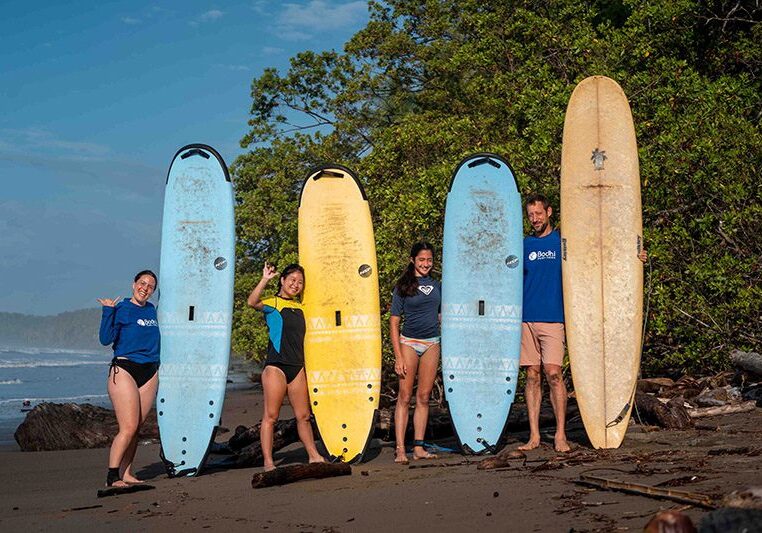
Group Surf Lessons
$65.00 + 13% VAT per person

Group lessons are great for families, groups of friends, and couples who only have a few hours to dedicate to surfing during their vacation. Our group surf lessons are two hours long, and have a 5:1 student to instructor ratio. We focus on teaching our students to surf safely in a beautiful natural classroom. Even for those who are traveling alone, group surf lessons can provide a great opportunity to meet other travelers/future surfistas - please note that we require a minimum of two people for a group lesson.

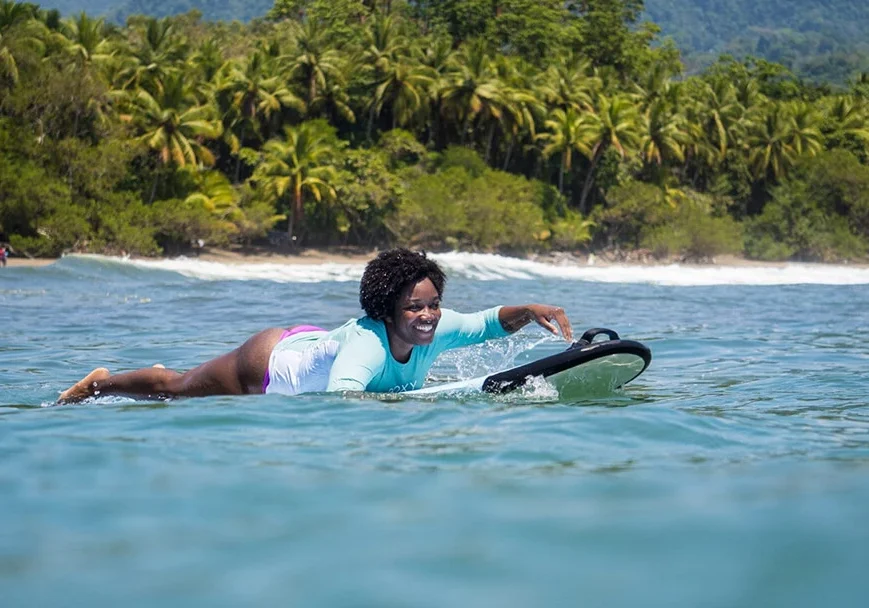
2-Day Surf Clinic
$150.00 + 13% VAT per person
The 2-Day Surf Clinic consists of six hours of surf instruction over the course of two days. In these two sessions we cover all the basic theory and explain and demonstrate the techniques necessary to get you surfing and keep you safe in the process. We maintain a 5:1 student to instructor ratio to ensure that each of our students obtains the attention and instruction they require. The two day surf clinic is ideal for students that wish to have ample time in the water putting the theory into practice. Both lessons take place at Playa Colonia inside the Marino Ballena National Park. Please note that we require a minimum of two people for a 2-day surf clinic.
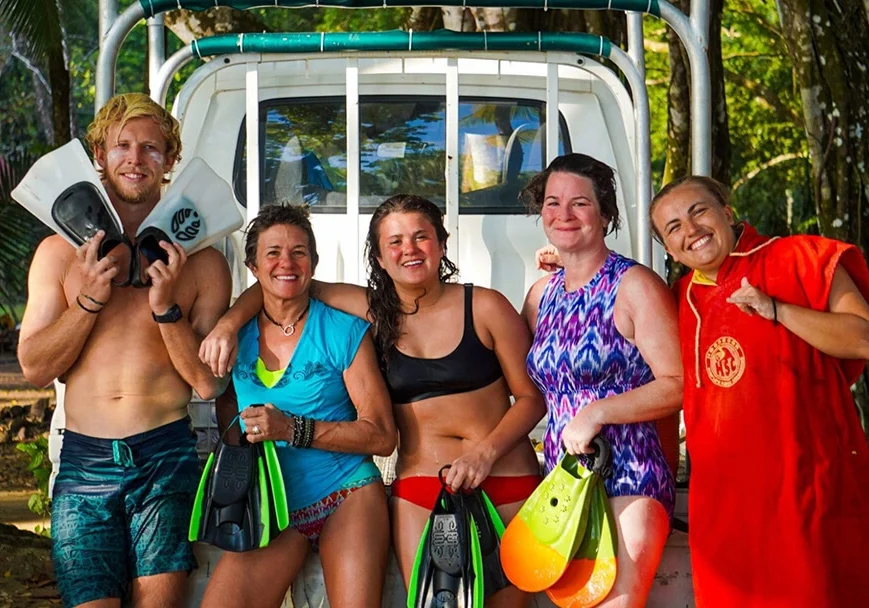
Group Bodysurf Lesson
From $65.00
The Group Bodysurf Lesson is a great way to gain confidence and awareness in the ocean by learning how to swim through the impact zone and surf waves in the simplest way possible - without a surfboard. Over the course of this two-hour lesson, you will learn essential ocean knowledge, including how to avoid potential hazards such as surfers, rip currents, stingrays and other marine life. Participants will also learn how to identify a safe zone to enter the ocean, how to swim out through and dive under waves in the impact zone, and how to ride waves back to shore using nothing more than your body.
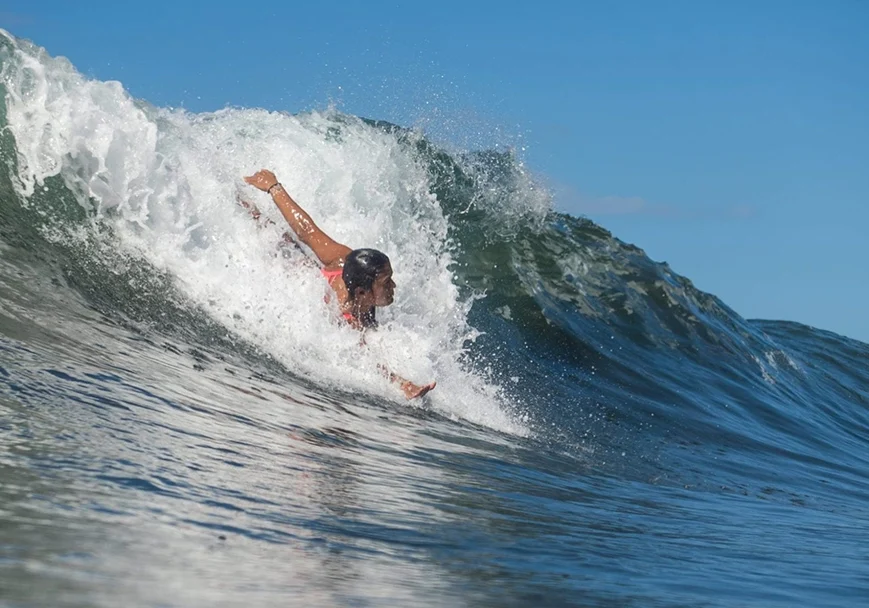
2-Day Wave Sliding Clinic
From $150.00
The 2-Day Wave Sliding Clinic combines bodysurfing and surfing to allow you to gain confidence and be successful in the ocean. This 6-hour course is delivered in two days. On day one, you learn how to surf in the simplest way possible, with your body. On day two, you apply your ocean confidence and bodysurf techniques to surfing with a board. The 2-Day Wave Sliding Clinic is an ideal choice for students who wish to have more time to get comfortable in the ocean and gain a holistic wave riding experience. Please note that we require a minimum of two people for a 2-Day Wave Sliding Clinic.
Heading
Featured In


